A Pioneer On and Off the Water
2/1/2024 1:09:00 PM | Men's Rowing, General
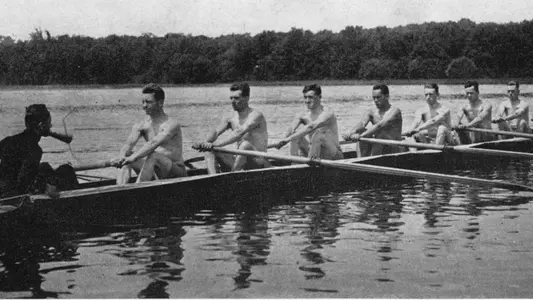
The first Black collegiate rower, Joseph Edward Trigg, donned the Block S from 1913 to 1915 as a member of the Orange rowing team. The Tennessee native also played football for the Orange in 1914 and 1915 and earned his Syracuse University degree in 1916.
As we celebrate Black History Month, we reflect on the history, contributions, culture and accomplishments of Black Americans who have enriched communities, organizations and entire industries. We also recognize the sacrifices of those who have committed themselves to social justice and equity. Visit Cuse.com as we highlight the accomplishments and contributions of Syracuse's Black community throughout the month.
The oldest of four children of Joseph M. and Cora Lee Trigg, he was born in Knoxville, Tennessee in December 1894. Trigg and his three younger siblings were raised in Washington D.C. after his father, a school teacher, received an appointment as a clerk in the Post Office Department in 1898. An All-Scholastic left tackle at M Street High School, located in the Truxton Circle sector of the city, Trigg enrolled at Syracuse after having been somewhat of a "hometown hero" on the football field. He decided to add to his athletics story by picking up an oar, which he'd later find difficult to put down. He rowed seven seat in the Varsity 8 as a senior, after rowing in the seventh seat in the freshman crew and the five seat in the junior varsity 8.
Triggs' excellence in the athletics world paralleled that of his adult life. Upon the conclusion of his competitive athletic career, he aspired to serve as a representative of the black community in both the medical field and United States armed forces during World War I. He graduated from Howard University's Medical School in 1924 with a degree that propelled him into a career as a general practitioner. He also fulfilled his primary interest in obstetrics. It is estimated that he delivered at least 1,200 infants, some of them two generations of the same family. His patients reported admiring his nurturing and kind approach to medicine.
Even after having put down the oar and picking up a stethoscope, Trigg remained active in the sports community. During medical school, he began his second football career, but this time as a coach and collegiate official. He later served for many years as an intercollegiate football official. Clearly drawn to the athletic atmosphere, his medical career led him to serve as a boxer's sideline physician.
He became active and a leader in the St. Vincent de Paul Society and other Catholic organizations and a member of the Board of Directors of the Catholic Youth Organization. He came to enjoy the confidence of Archbishop Patrick O'Boyle, as one of the outstanding Catholic laymen in the city. Trigg was a member of the Medico-Chirurgical Society and the Medical Society of the District of Columbia. He belonged to the Alpha Phi Alpha and Chi Delta Mu fraternities and was a member of the staff of Freedmen's Hospital. As a tribute to his great contributions toward improving the welfare of youth, a Joseph E. Trigg Home at the St. Vincent de Paul Camp in Maryland has been named in his honor.
Trigg's life was cut short in 1955 due to the looming medical effects He faced from his exposure to the conditions of World War I. He will be remembered for being one of the first Black athletes to break down the racial barriers that existed in collegiate sports and as a powerful force in the community for his expertise in medicine and his willingness to help others.
As we celebrate Black History Month, we reflect on the history, contributions, culture and accomplishments of Black Americans who have enriched communities, organizations and entire industries. We also recognize the sacrifices of those who have committed themselves to social justice and equity. Visit Cuse.com as we highlight the accomplishments and contributions of Syracuse's Black community throughout the month.
The oldest of four children of Joseph M. and Cora Lee Trigg, he was born in Knoxville, Tennessee in December 1894. Trigg and his three younger siblings were raised in Washington D.C. after his father, a school teacher, received an appointment as a clerk in the Post Office Department in 1898. An All-Scholastic left tackle at M Street High School, located in the Truxton Circle sector of the city, Trigg enrolled at Syracuse after having been somewhat of a "hometown hero" on the football field. He decided to add to his athletics story by picking up an oar, which he'd later find difficult to put down. He rowed seven seat in the Varsity 8 as a senior, after rowing in the seventh seat in the freshman crew and the five seat in the junior varsity 8.
Triggs' excellence in the athletics world paralleled that of his adult life. Upon the conclusion of his competitive athletic career, he aspired to serve as a representative of the black community in both the medical field and United States armed forces during World War I. He graduated from Howard University's Medical School in 1924 with a degree that propelled him into a career as a general practitioner. He also fulfilled his primary interest in obstetrics. It is estimated that he delivered at least 1,200 infants, some of them two generations of the same family. His patients reported admiring his nurturing and kind approach to medicine.
Even after having put down the oar and picking up a stethoscope, Trigg remained active in the sports community. During medical school, he began his second football career, but this time as a coach and collegiate official. He later served for many years as an intercollegiate football official. Clearly drawn to the athletic atmosphere, his medical career led him to serve as a boxer's sideline physician.
He became active and a leader in the St. Vincent de Paul Society and other Catholic organizations and a member of the Board of Directors of the Catholic Youth Organization. He came to enjoy the confidence of Archbishop Patrick O'Boyle, as one of the outstanding Catholic laymen in the city. Trigg was a member of the Medico-Chirurgical Society and the Medical Society of the District of Columbia. He belonged to the Alpha Phi Alpha and Chi Delta Mu fraternities and was a member of the staff of Freedmen's Hospital. As a tribute to his great contributions toward improving the welfare of youth, a Joseph E. Trigg Home at the St. Vincent de Paul Camp in Maryland has been named in his honor.
Trigg's life was cut short in 1955 due to the looming medical effects He faced from his exposure to the conditions of World War I. He will be remembered for being one of the first Black athletes to break down the racial barriers that existed in collegiate sports and as a powerful force in the community for his expertise in medicine and his willingness to help others.


Saturday, September 19
Saturday, September 19
Saturday, September 19
Saturday, September 19