Neal Leads the Way in Athletic Training Profession
3/8/2002 11:02:28 AM | Football
By Brian Seeling
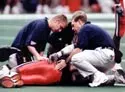
"The entire incident ran like training session, except it was for keeps," said Tim Neal, Syracuse University's head athletic trainer, who, along with SU team physician Irving Raphael, played an integral part in Bram's survival.
This week (March 4-8) Neal is taking his athletic training expertise to the State Capitol in Albany in conjunction with the second annual Athletic Training Week in New York State. He is appearing at a booth set up by the New York State Athletic Training Association where legislators have the opportunity to stop and ask any questions they might have concerning the field of athletic training. The goal of the week is to increase awareness of legislators in Albany on the role of athletic trainers and the health system and to recognize the value of athletic trainers and their role in dealing with athletes.
"We need to move forward in terms of developing not only a greater awareness of what we (athletic trainers) do, but a greater appreciation of what we do in terms of pay, benefits, recognition, professional acceptance," Neal said. "I think that is important."
Working away from the spotlight placed on the sports teams they service, athletic trainers are an integral part of any team's success both on and off the field. They are often the first to arrive and the last to leave at the end of the day.
"We work until the work is finished," said Neal, who oversees the entire sports medicine department and also works with the football team on a daily basis throughout the year. "Sometimes that is six o'clock, sometimes that is eight o'clock at night."
In addition to being responsible for all aspects of the SU sports medicine program, Neal and his staff are constantly searching for new athletic training trends in an effort to gain more knowledge. Often times these efforts go unnoticed.
"We are a little unique at Syracuse University because I think we are very well appreciated by administration, coaches, and student-athletes," Neal said. "But that is not the case everywhere in New York State."
Neal, a native of Ohio and a certified athletic trainer since 1979, is optimistic about the future of the profession. According to Neal, there is a great deal of interest involved in athletic training, although sometimes people interested in the profession are discouraged by low entry-level pay rates. An athlete in his younger days, Neal was realistic about his chances of attaining athletic stardom early on. Thus he followed a path many other former athletes have into sports medicine.
"Not being very good in athletics, I hoped to stay in athletics in some way," Neal said. The rest is history as Neal has been involved in sports medicine ever since.
For those interested in becoming an athletic trainer, Neal has three pieces of advice.
"Knowledge is the key," he says. "Second of all you have to be a good communicator and listener. Third of all you have to get comfortable with the uncomfortable because we deal with uncomfortable things all the time."
Undoubtedly these three staples of athletic training will be communicated in Albany as SU's head athletic trainer spreads the word and raises awareness about athletic training in New York State.