Q&A With the Orangewomen
1/21/2003 4:52:35 PM | Women's Rowing
The 2003 season is the start of a new era for the women’s rowing team. With the graduation of 12 seniors last spring, SU ended a period which saw the rowing team rise to become one of the nation’s elite programs. The Orangwomen made three consecutive trips to the NCAA Championship, including the Orangewomen’s first team bid last spring in Indianapolis, Ind.
“We are looking to go to the next level, which hopefully means getting a boat in the medals at the NCAA,” coach Kris Sanford said.
Sanford is preparing for the team to be fast on May 18, the date of the Eastern Sprints. The head coach also has her sights on three more goals: winning the BIG EAST Challenge again; returning to the NCAA Championship as a team; and getting the varsity eight in to the top 10.
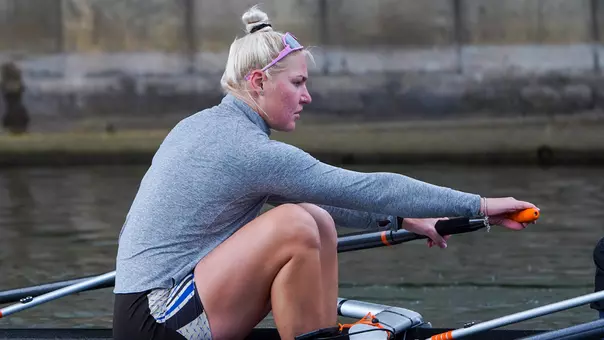
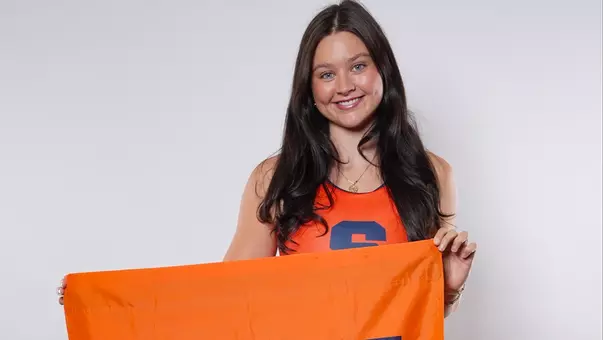
The rowing team kicked off the start of its winter training with a week-long trip to Melbourne, Fla. in early January. As the team heads back indoors to begin training for the start of the season on March 29 versus Boston University, captains Marisa Begley and Nicole Garofalo answered a few questions about their trip to Florida. Begley a junior, was the coxswain of the 2002 JV team that finished 12th at the NCAA championship. As a coxswain, Begley is the eyes for the rowers. She also gives encouragement and feedback. Garofalo, a senior, rowed the two seat in the 2002 varsity eight that finished 11th at the NCAA Championship.
Q: As a coxswain, what did you work on in Florida?
MB: The team does a lot of team evaluations. The rowers evaluate us after every practice so we can build everyday. We take their comments and really work with them to improve ourselves on different things like technique.
Q: What is an example of the feedback you would get from a rower?
MB: A lot of rowers like personal technique feedback. Everyone has a different personal preference of things to say and talk about. Nicole likes technical feedback.
NG: It’s good for a coxswain to give technical feedback to the rowers. If everyone is working on their technique, the whole output of the boat will be that much better.
Q: What are you looking for when you are in a boat?
MB: As a coxswain, I am looking for blade timing, blades popping out early, things like that.
Q: Was the team divided up into varsity, junior varsity and novice boats?
NG: We mixed the boats evenly through the week. I think that was to get everyone on the same page. We had really long practices, not very intensive, but low-key ones that would get us back in the swing of things after being off the water.
I think it’s important for Kris (Head coach Sanford) and for us to see where we are. The trip is really for us to get everyone back on the water. I think it’s a big indicator for Kris who is going to be in contention for what boat come March.
Once we are indoors, it is more about fitness and measures of fitness, rather than your technical ability as a rower. A lot of people do better technically as rowers and can prove themselves more in a boat rather than on an indoor machine.
Q: What do you think the team gained over the course of the trip?
MB: Melbourne gives the girls a chance to really work to refine their technique. We are not training for any particular race so it gives them a good opportunity to work on getting themselves better.
Everyone got a lot better over the week. I think everyone used their evaluations to benefit themselves and get better. I think the rowers, just from the beginning to the end, showed a huge difference. The amount we got done in six days was a lot. You could feel a huge difference in the boat from the first day to the last day. It felt as if we were on the water for months.
NG: Melbourne is good for us because it is very laid back. We don’t have to worry about school because we are still on break.